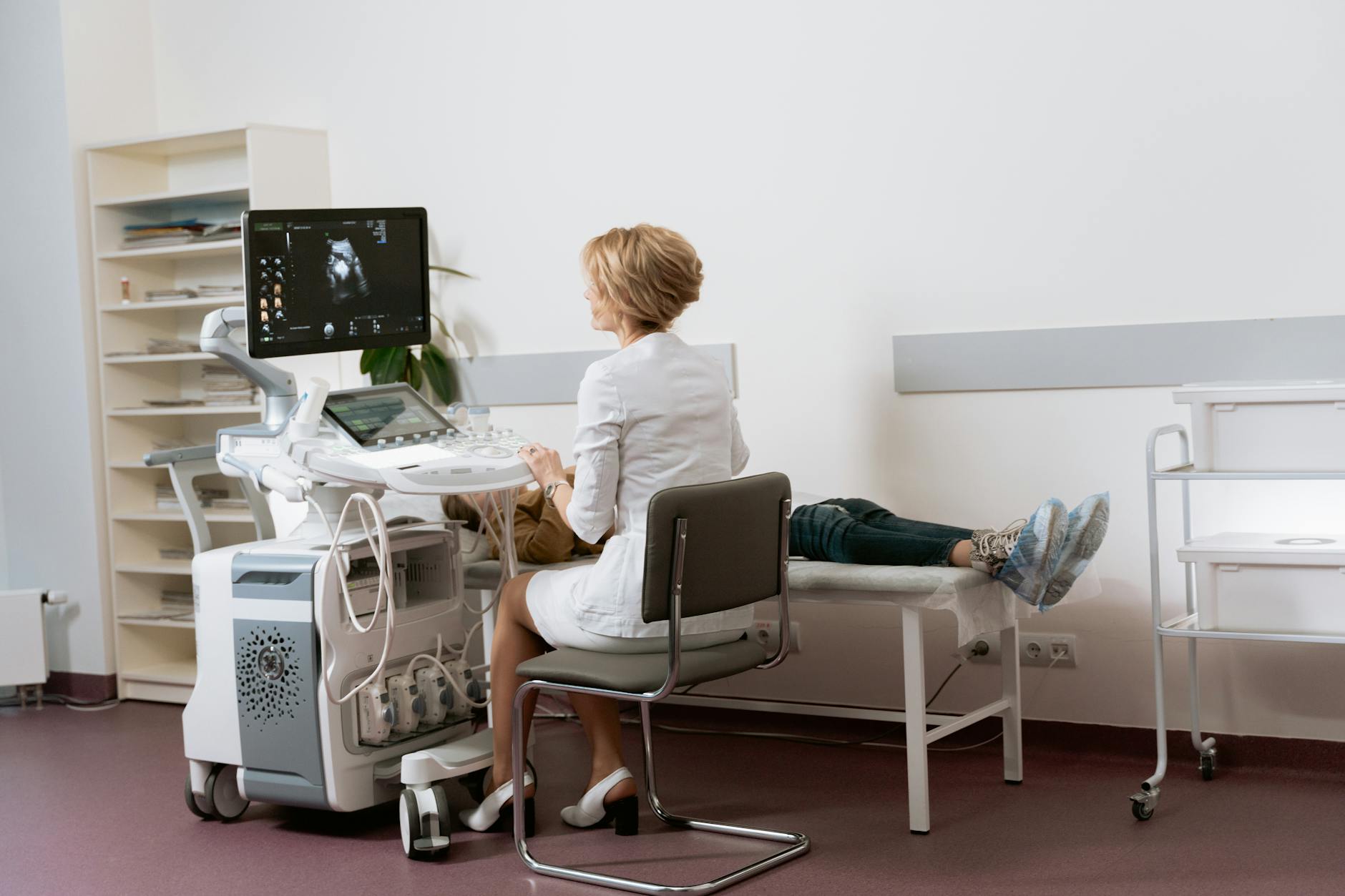
You're mid-scan on a complex obstetric case. You're optimizing gain, tracking a suspicious finding, mentally composing your worksheet, and a patient asks, "Is everything okay?" You answer — probably with something reassuring but vague — and move on. Later, you barely remember what you said. That moment of disconnect wasn't indifference. It was cognitive overload at work, quietly dismantling the empathic connection that defines quality patient care.
The concept of cognitive load is well established in educational psychology, but its implications for real-time clinical performance — particularly in a field as technically demanding and emotionally charged as diagnostic sonography — deserve far more attention than they typically receive in continuing education or training programs.
The Architecture of a Full Brain
Cognitive load refers to the total mental effort being used in working memory at any given moment. Cognitive load theory was originally developed by educational psychologist John Sweller in the 1980s to describe the limited capacity of working memory to process information simultaneously. While Sweller's framework was designed to improve instructional design, its core insight — that the brain has hard ceiling on how much it can actively process — translates with uncomfortable precision to the ultrasound exam room.
The ceiling is lower than most people assume. Working memory capacity is generally accepted in cognitive psychology research to hold approximately four chunks of information at a time, a finding associated with researcher Nelson Cowan's 2001 work refining the earlier 'seven plus or minus two' model. Four chunks. When you consider what a sonographer is simultaneously processing during a study — transducer angle, image optimization, anatomy identification, protocol adherence, patient history, time pressure, and room environment — it becomes clear that the system is routinely pushed past its limits before the patient has finished settling onto the table.
Where Empathy Gets Crowded Out
Empathy in a clinical encounter is not a passive trait. It requires active cognitive engagement: reading facial expressions and body language, tracking the emotional subtext of patient statements, formulating appropriate and honest responses, and modulating your tone accordingly. Each of these is a working memory task. When the technical demands of the scan consume the majority of available cognitive resources, empathic processing is not eliminated — it is simply deprioritized by a brain that is managing overload.
💼 Career Opportunities
The result is recognizable to anyone who has worked a heavy schedule: shortened eye contact, clipped answers, reassurances that are more reflexive than considered, and a subtle flattening of interpersonal warmth that patients absolutely notice even if they can't name it. Research across clinical disciplines consistently links high cognitive load conditions — time pressure, complex cases, noisy environments — with degraded communication quality and reduced patient-centered behavior from clinicians.
The Silence Problem
Sonographers occupy a uniquely difficult communicative position. Professional and legal standards in most institutions limit what can be disclosed during the exam itself, creating a tension that demands careful, real-time verbal management. Under low cognitive load, an experienced sonographer can navigate this with nuance — acknowledging patient anxiety, offering appropriate reassurance, and maintaining warmth without crossing the disclosure line. Under high load, the easiest path is silence, or a script. Patients perceive both as coldness or evasiveness, which amplifies their anxiety and, paradoxically, increases the demands on the sonographer to manage that anxiety. Overload creates a feedback loop.
The Novice-Expert Gap Is Real — But Cuts Both Ways
New sonographers carry higher intrinsic load because technical tasks that are automatic for experienced practitioners still require conscious effort. A student scanning a gallbladder is genuinely using more working memory on transducer mechanics than a 15-year veteran, leaving less available for patient interaction. Training programs should frame this explicitly rather than simply telling students to "be more empathic" — it's a cognitive resource problem with a developmental arc, not a character deficiency.
But experienced sonographers are not immune. Expertise reduces intrinsic load on familiar tasks, but it also leads to heavier patient assignment, more complex referrals, and the quiet expectation that veterans can handle more. The cognitive surplus that experience creates can be rapidly consumed by institutional pressure, leaving an expert sonographer just as overloaded — and just as communicatively compromised — as a student, through a different mechanism.
Research-Backed Strategies for Managing Cognitive Load in Practice
Managing cognitive load in clinical settings is not about working harder or caring more. It is about designing your workflow, environment, and habits to reduce unnecessary mental burden so that cognitive resources are available for the parts of patient care that matter most.
1. Pre-Scan Preparation as Cognitive Offloading
One of the most effective principles from cognitive load research is offloading: moving information out of working memory and into the environment. In practical terms, this means reviewing the clinical indication, relevant history, and any prior imaging before the patient enters the room — not while they're on the table. When you already hold the clinical picture, you're not building it in real time, and that frees working memory for the person in front of you. This sounds obvious, but under scheduling pressure it's routinely skipped in favor of scanning first and reading later.
2. Reduce Environmental Noise Deliberately
Extraneous cognitive load — the load imposed by a poorly designed environment rather than by the task itself — is the most wasteful category because it contributes nothing to the quality of the scan. A cluttered room, multiple conversations audible through a thin curtain, constant interruptions from a paging system, or an ultrasound system with a counterintuitive interface all constitute extraneous load. Advocating for better room design, keyboard shortcuts, customized system presets, and protected exam time isn't just about efficiency — it's a direct intervention on the cognitive resources available for patient empathy.
3. Use Structured Communication Scripts — Strategically
Scripts have a bad reputation as inauthentic, but they serve an important cognitive function: they convert a high-effort communication decision into a low-effort retrieval. Having a small set of well-considered, pre-formed phrases for common patient concerns — anxiety about results, questions about fetal anatomy, distress during a painful study — means you're not constructing language from scratch under load. The phrasing can still be delivered warmly and adapted to context. The goal is to free up working memory for listening and emotional attunement, not to replace genuine interaction with a recording.
4. Embrace the Deliberate Pause
Brief, intentional pauses during a study — stopping acquisition, removing transducer contact for a few seconds, making eye contact — serve a dual purpose. They allow you to partially reset working memory by temporarily reducing the technical task demands, and they signal presence to the patient. Even 10 to 15 seconds of undivided, task-free attention registers differently to a patient than the same amount of time spent talking while scanning. This is not a luxury; it is a technique, and it can be practiced.
5. Recognize the Load Signature of Difficult Cases
Certain clinical scenarios reliably drive cognitive load into the red: unexpected pathology mid-scan, technically difficult windows requiring prolonged effort, fetal demise or missed findings, and patients who are highly anxious or difficult to position. Experienced sonographers can learn to recognize the cognitive signature of these situations and deploy compensatory strategies proactively — requesting a colleague to assist, explicitly resetting before re-entering patient communication, or flagging to supervisors when load is affecting care capacity. This requires institutional cultures that normalize those conversations, which is its own challenge, but the individual skill of self-monitoring under load is developable.
6. Post-Scan Reflection as a Training Tool
Brief, structured self-reflection after demanding studies — even two or three minutes — builds metacognitive awareness of how overload affects personal performance. Asking yourself not just "did I get the images?" but "how was my communication during that scan?" and "what was driving my cognitive load?" develops the kind of self-monitoring that allows earlier intervention next time. In departments with preceptorship structures, this reflection can be formalized as part of feedback conversations without adding significant time burden.
Institutional Responsibility Cannot Be Outsourced to Individual Sonographers
Strategies that place the entire burden of cognitive load management on individual practitioners are incomplete. Chronically high scan volumes, inadequate turnaround time between exams, poor system ergonomics, and the expectation that sonographers will absorb ever-increasing administrative documentation without scheduling relief all drive structural overload. When an individual's best cognitive hygiene practices are overwhelmed by institutional conditions, the answer is not better mindfulness — it is workload review, protocol optimization, and leadership that understands the cognitive science of clinical performance.
Departments that invest in ultrasound system customization, room standardization, protected preparation time, and reasonable patient ratios are not simply being accommodating. They are engineering environments where the working memory capacity of their staff is available for what it cannot be replaced by — genuine human presence with a patient who is frightened and waiting for answers.
The Practical Bottom Line
Cognitive load theory gives sonographers a precise, non-judgmental language for something many have felt but struggled to articulate: that the empathy gap in difficult exam moments is not a failure of character but a predictable consequence of exceeding the brain's working memory limits. Understanding the mechanism is the first step toward addressing it systematically — in individual practice, in training programs, and in departmental policy.
The patient on your table is not aware of your cognitive load. They are aware of whether you seem present. Bridging that gap, under real clinical conditions, is the work — and it starts with recognizing that your brain, like working memory itself, has a finite capacity that deserves to be managed, not simply demanded of.
Sources
Every factual claim in this article was independently verified against the following sources:
- Cognitive load - Wikipedia — en.wikipedia.org
- The Magical Mystery Four: How is Working Memory Capacity Limited, and Why? - PMC — pmc.ncbi.nlm.nih.gov